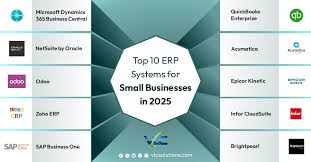
As businesses accelerate their digital transformation, Enterprise Resource Planning (ERP) systems continue to evolve rapidly. By 2026, ERP platforms are expected to become more intelligent, more modular, and more connected than ever before. Companies of all sizes are now looking for systems that improve efficiency, support real-time decision-making, and easily adapt to changing market conditions.
Below are the top 10 ERP platforms to watch in 2026, based on innovation, AI capabilities, cloud adoption, scalability, and industry relevance.
1. SAP S/4HANA
SAP remains a global ERP leader, and S/4HANA continues to set the benchmark for enterprise-scale ERP solutions. In 2026, SAP’s focus on AI-powered automation, predictive analytics, and industry-specific modules makes it a top choice for large corporations. Its strong cloud ecosystem and deep integration capabilities keep it at the forefront.
2. Oracle Fusion Cloud ERP
Oracle Fusion is gaining significant traction due to its strong financial management tools, machine learning insights, and robust reporting features. Oracle’s aggressive cloud innovation strategy and global infrastructure expansion make it one of the most competitive ERP platforms heading into 2026.
3. Microsoft Dynamics 365
Dynamics 365 is a favorite among mid-sized businesses due to its flexibility and seamless integration with Microsoft tools like Teams, Azure, and Power BI. By 2026, Dynamics is becoming even more powerful with AI Copilot features, enabling intelligent workflows and real-time business optimization.
4. Odoo Enterprise
Odoo continues to rise as one of the most modular and cost-effective ERP solutions available. Its open-source roots, huge app ecosystem, and scalability make it perfect for businesses that want customization without high licensing fees. In 2026, Odoo’s new AI-enhanced modules further strengthen its appeal.
5. NetSuite ERP (Oracle NetSuite)
NetSuite remains a leader for fast-growing startups and global mid-sized companies. Known for its cloud-native platform, financial automation, and strong e-commerce integrations, NetSuite is expected to expand with more predictive analytics and industry-focused upgrades in 2026.
6. Infor CloudSuite
Infor specializes in industry-specific ERP systems, especially for manufacturing, logistics, and healthcare. Its CloudSuite platform benefits from Infor’s deep commitment to AI, supply chain optimization, and user-friendly design. By 2026, Infor is expected to dominate niche sectors with tailored solutions.
7. Workday ERP
Workday is widely recognized for HR and finance, but its full ERP capabilities continue to grow. Its modern cloud architecture and intuitive interface make it ideal for organizations prioritizing workforce planning, budgeting, and analytics. Expect Workday to further integrate generative AI capabilities by 2026.
8. Epicor ERP
Epicor specializes in manufacturing, distribution, and retail. Its next-generation Kinetic platform offers cloud flexibility, automation tools, and strong shop-floor integration. In 2026, Epicor is expected to attract more industrial businesses looking for purpose-built ERP solutions.
9. Acumatica Cloud ERP
Acumatica is one of the fastest-growing cloud ERP systems for SMEs. Known for its flexible licensing model, mobile-first experience, and strong project accounting features, Acumatica continues to gain momentum in 2026, especially among construction, services, and distribution companies.
10. Sage Intacct
Sage Intacct keeps strengthening its position as a powerful financial management ERP. Its strengths lie in accounting automation, multi-entity support, and compliance. With new AI-driven dashboards and enhanced integrations coming in 2026, Sage Intacct remains a top contender for finance-centric organizations.
Conclusion
The ERP landscape in 2026 is defined by intelligence, automation, and industry specialization. Whether a business is large or small, global or local, the right ERP platform can drastically improve efficiency, reduce costs, and support more strategic decision-making.